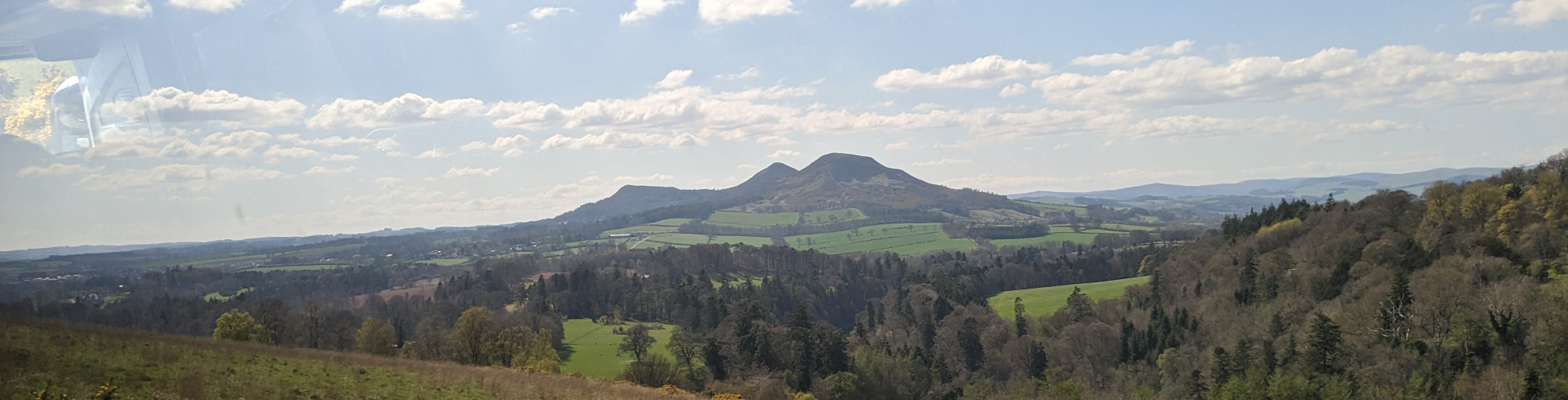

As usual we head off onto the Edinburgh by-pass and onto the A68. All very familiar. But then after Pathhead we turn onto an increasingly narrow lane, through fields to begin with and then into woodland. The coach stops at the end of the track leading to the Crichton Collegiate Church. We can see the ruins of Chrichton Castle (above) further up the lane. It was built in about 1400 but was attacked and badly damaged by the Douglas family in the early 1440s. William, Lord Crichton, then Chancellor of Scotland, repaired and expanded the castle the late 1440s.
The coach has been met by Henry Duncan, chair of the trustees of the Chrichton Collegiate Church Foundation. Since it’s unlikely the coach can turn round near the church, Caerwyn will drive on up to the end of the lane, and turn there while we walk the remaining few hundred yards. Henry ferries the less mobile in our group in his range rover.
In about 1440 – at the same time as the castle was rebuilt William Crichton, 1st Lord Crichton, Lord Chancellor of Scotland started to build a church on a site which may have been the location of an old Christian shrine

Today the church comprises north and south transepts either side of the tower, while to the east is the choir originally used by the priests and family for prayer and worship. To the north side of the choir is a sacristy. there was also a nave extending to the west of the surviving building. This was provided for the use of the local population, but would have been built to a lower specification than the more “important” parts of the church and as a result has not survived.
n 26 December 1449 the church was opened “Out of thankfullness and gratitude to Almighty God, our Lord Jesus Christ, the Blessed Virgin Mary, St. Kentigern and All Saints”. It was built in a Gothic and Romanesque cruciform style with a large central tower; the nave being used as the place of worship for the poor people.
It was consecrated as a collegiate church on the 29 December by the Bishop of St Andrews. A Provost, eight Prebendaries, two choir boys and a Sacrist were appointed to pray for the souls of the Crichton family.
The daily prayers were not as efficacious as the family might have hoped and their fortunes were soon falling. In 1479 William’s son had an ill-advised affair with the sister of James III, the result of which was a child. The king was further angered when allegations were made in 1484 that the Crichtons were plotting against him and their titles and possessions were forfeited with Crichton Castle was among a number of properties given to the Earl of Bothwell by James IV.
In any case the Reformation of 1560 swept away the system of collegiate churches in Scotland. During the Scottish Reformation of 1560 the glass was taken from the windows, the floor converted back to earth and the medieval stone tracery destroyed. The chancel roof was still extant but the church was considered unusable for services. To add insult to injury Crichton Collegiate Church was part of the estates seized from James, 4th Earl of Bothwell in 1567 after the abdication of his wife, Mary Queen of Scots but while the new owner embarked on embarked on a major programme of rebuilding of the castle in the 1580s, the church was ignored and over the following centuries became little more than a ruin.
Crichton Collegiate Church suffered through being part of the estates seized from James, 4th Earl of Bothwell in 1567 after the abdication of his wife, Mary Queen of Scots.
By 1569 it was being used as the parish kirk (church) and a minister, Adam Johnston, was ordained to lead the service. By the 1580s major restoration work began, though the nave was said to be ruinous, as it is to this day. In 1641, by an Act of Parliament, Crichton Church was declared to be the parish church for all time. Though there was more restoration and adaptation in 1729 it was considered to have been carried out “badly”.
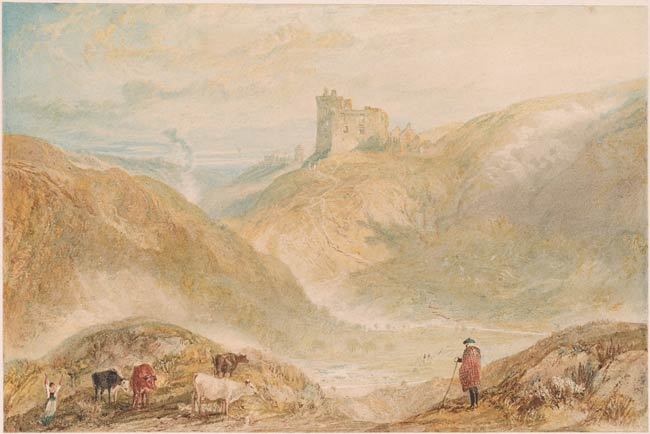
In the 19th century, the future of Crichton looked equally bleak. A a ‘romantic ruins’ Crichton church and castle attracted painters, including JMW Turner, who sketched the castle (below) in 1818. I gather he also painted, or at least sketched the church but I haven’t tracked down that image.
In 1822, it was decided that repairs had to be carried out imminently, or, it was suggested, perhaps it was better to abandon the chapel altogether – underlining the desperate state in which the building was found to be in. It was nevertheless decided that repairs should be carried out.
In 1825 the church, was brought back to life to serve the wider community. A pulpit was placed high on the south wall, and with the extensive use of galleries around three sides of the interior as many as 600 people could be seated in what must have been a very cramped space when full.
Despite these renovations, in the late 19th century, further repairs and renovations had to be carried out. In 1898, when all “innovations” were cleared out, only leaving the bare and solid walls. Ballantine and Gardener (1898), new oak pews and a pipe organ built by the Glasgow company Joseph Brook were installed (1899). Only the choir, transceptual chapels and the central tower now survive. In appearance the tower appears to be rather too large to give a pleasing balance to the whole structure.
The church reopened on May 11, 1899. The latest series of restoration work was carried out in 1999, to coincide with the church’s 450th anniversary.
The Church of Scotland closed the church in 1992 and the Crichton Collegiate Church Trust acquired the property. The Trust was established in 1994 to care for the building, to undertake a third restoration and to ensure that it continues to play an important role, serving the community in a number of ways. While no longer in use as a parish church,Christian weddings and funerals, instrumental and choral concerts, other cultural events do take place and it is available for visiting. The church is used forinter-denominational services about six times a year. Crichton is a category A listed building.
We had a wander round the church and then Henry – whose father had been rector of the church – told us much of what I have written above. We discovered that Louise, one of our number, had been in the church before,as a schoolgirl when she was in a choir singing in a choral competition which is held here…. The acoustics here are good, and there is little exterior noise in what is a fairly isolated setting which is why Edinburgh-based classical record label Delphian Records use the Church for many of their recordings, notably those of The Marian Consort and guitarist Sean Shibe.
Before we left some of us went to take a closer look at the castle.
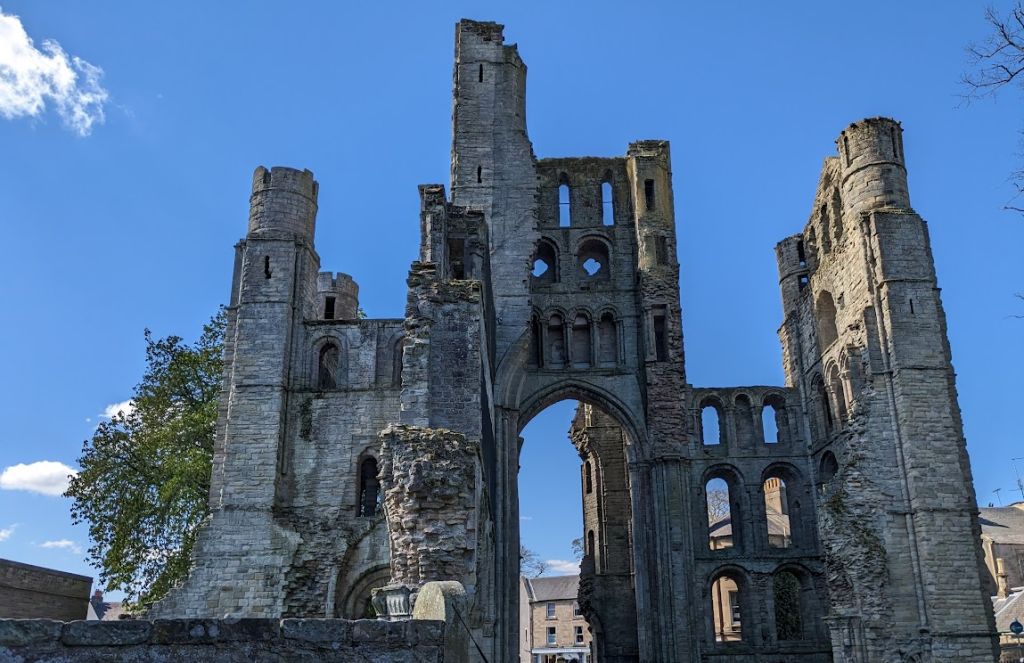
Kelso Abbey
At the moment the little that is left of the abbey is fronted by a six foot high fence with smaller fencing round the back. It seems to have been closed to visitors for some time.

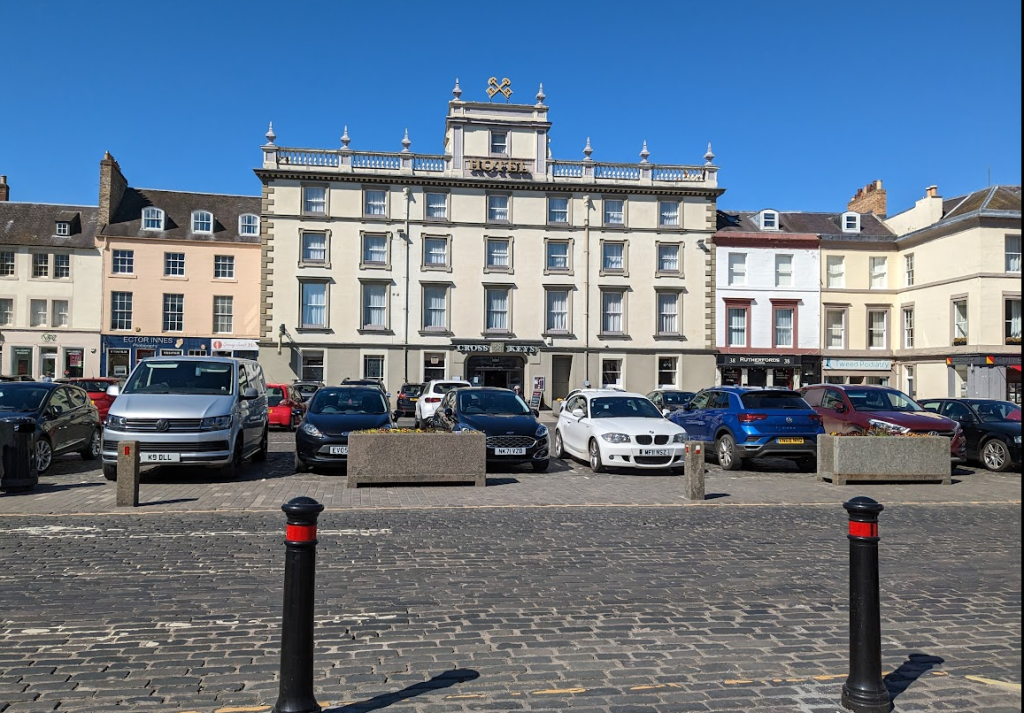
It did not detain anybody for long, and we walked on to the large cobbled square which is the home of the the Cross Keys Hotel our lunch destaintion. Apparently the present hotel was built in 1769, but in other forms, a Cross Keys Hotel has occupied the site since the earliest days of Scottish Coaching Inns.

Jedburgh Abbey
Lecture on Folklore and Archaeology
The Legend of the Stone Circle known as Long Meg and Her Daughters | Ancient Origins (ancient-origins.net)
The Legend of Thomas the Rhymer – Scottish Highland Trails
Blue stone choippings
White Horse of Uffington